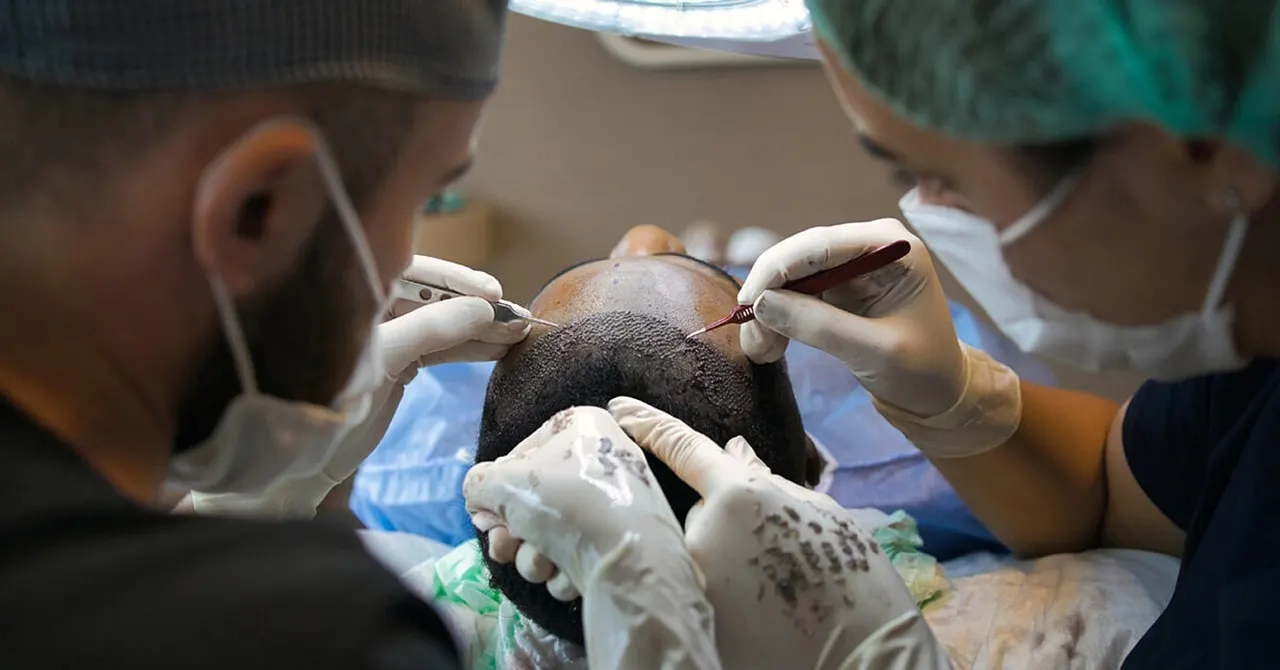
Why hair transplantation went from niche to mainstream

Twenty years ago, hair transplantation was something patients whispered about. Today it is one of the most searched cosmetic procedures on the planet. Follicular unit extraction (FUE) and direct hair implantation (DHI) dominate social feeds, clinic billboards in Istanbul, and long-haul flight itineraries from London, Riyadh, and Sydney. The shift is not vanity alone: androgenetic alopecia affects a large share of men by middle age, and a meaningful minority of women after hormonal change, illness, or traction styling. When medication and lifestyle changes stall, surgery becomes the next logical question.
Global demand is driven by three overlapping forces: better techniques with faster recovery than strip FUT, transparent before-and-after culture online, and medical tourism pricing that makes a week abroad cheaper than a single procedure in some home markets. The result is a crowded marketplace where volume leaders, boutique surgeons, and aggressive sales mills all compete for the same search terms. Understanding where procedures cluster—and why—helps you separate destination hype from clinical fit.
This guide summarises country-level patterns we see in directory data, forum threads, and published industry estimates. Figures below are approximate ranges from ISAPS global surveys, national health-tourism reports, and clinic-market analyses; they shift year to year. Use them for orientation, not as a league table of “best” care. Your donor quality, goals, and risk tolerance matter more than a country’s marketing budget.
How popular is hair transplantation worldwide?
Hair restoration sits inside the broader cosmetic surgery market, which ISAPS and allied bodies report as growing steadily post-pandemic. Within that segment, hair transplantation is unusual: it is often male-skewed, repeat-customer rare (donor is finite), and heavily cross-border. Patients frequently travel specifically for price and package convenience rather than because a technique exists only abroad.
Forum activity on HairTransplantSelf mirrors the macro picture. Threads about Turkey, India, and the UK generate the highest reply counts; South Korea and the United States appear often in “quality over price” discussions; Spain, Poland, and the UAE show up in European and Gulf patient routes. Complaint is not that one country “wins,” but that demand is concentrated in a handful of hubs while outbound patients originate from almost every high-income economy.
Estimated procedure volume by leading country
No single public registry counts every hair transplant globally. The ranges below combine ISAPS-style national estimates, health-ministry tourism statistics where published, and market-research banding used in industry press. Treat them as order-of-magnitude guides.
| Country | Est. annual procedures | Typical all-in price (USD, FUE) | Medical tourism share | Volume vs quality profile |
|---|---|---|---|---|
| Turkey | 450,000–650,000 | $1,800–$4,500 | Very high (often >70% of cases) | Highest global volume; wide quality spread |
| India | 150,000–250,000 | $1,200–$3,500 | High | Strong value; verify surgeon-led care |
| United States | 80,000–120,000 | $8,000–$20,000+ | Low (mostly domestic) | High regulation; premium pricing |
| South Korea | 40,000–70,000 | $4,000–$10,000 | Moderate (Asia-Pacific inbound) | Precision aesthetic focus; smaller graft marathons |
| United Kingdom | 25,000–40,000 | £4,000–£12,000 | Low (patients often leave) | Conservative planning; outbound competition |
| Thailand | 30,000–50,000 | $2,500–$6,000 | High | Tourism bundle model; mixed tiers |
| Spain / UAE / Poland | 10,000–35,000 each | Mid-range vs home market | Moderate to high | Regional hubs for EU and Gulf patients |
Turkey’s outlier status is real: Istanbul alone advertises more hair-transplant chairs per square kilometre than any other city. That scale drives innovation and competition—but also technician-led mills, recycled marketing photos, and deposit-first sales channels. India and Thailand follow similar economics at slightly different price points. The US and South Korea sit at the opposite end: fewer “package holidays,” more emphasis on physician reputation and medico-legal accountability.
What drives medical tourism for hair transplants?
Patients who fly for surgery usually cite a short list of motivators. Price is the loudest, especially when home-country quotes exceed $10,000 for 3,000 grafts and a destination clinic advertises half or less with hotel and transfers included. Availability matters too: popular surgeons in London or Los Angeles may book months ahead, while high-volume destinations offer next-week slots—sometimes too easily.
Anonymity and convenience play quieter roles. A man from a small town may prefer recovering abroad. Corporate professionals schedule four-day Istanbul itineraries around public holidays. Influencer proof and WhatsApp sales funnels reduce perceived friction. None of these replace medical due diligence, but they explain why demand keeps rising even as domestic clinics expand.
- Price arbitrage: Labour, rent, and malpractice ecosystems differ; savings of 50–80% vs US/UK quotes are commonly quoted in patient forums—not guaranteed net of revisions or travel.
- Packaged logistics: Airport pickup, interpreter, hotel, and clinic under one invoice simplify planning for first-timers.
- Technique marketing: Sapphire FUE, DHI pens, and “robotic” branding travel faster on Instagram than on peer-reviewed journals.
- Peer social proof: YouTube diaries and Reddit timelines normalise flying for surgery.
- Home-market friction: Limited NHS coverage in the UK and insurance exclusions in the US push patients outward.
Forum pattern we see repeatedly: a patient compares three Turkish quotes, one UK consult, and one US telehealth assessment—then chooses Turkey on price plus immediacy, not after verifying who extracts grafts on the day. The procedure works for many; the regret stories almost always trace to skipped questions, not the country itself.
Country snapshots: who leads and in what way
Turkey: volume capital of hair restoration
Turkey ranks first in international hair-transplant tourism by most industry summaries. German, Italian, British, Arab Gulf, and North African patients form the largest inbound groups. Strengths include experienced teams, competitive pricing, and a mature supply chain of clinics, hotels, and translators. Weaknesses are well documented on our scam clinic resource: unlicensed operators, technician-only surgery, and aggressive upselling of graft counts. The country is not monolithic—Istanbul hosts elite surgeon-led clinics and high-throughput agencies in the same postcode.
India: scale, value, and homework
India’s market grew on the same formula as other medical-tourism leaders: English-speaking staff, lower operating costs, and metropolitan hospitals accustomed to foreign patients. Mumbai, Delhi, and Hyderabad attract regional and diaspora traffic. Savings versus Western Europe can approach 70–80% on sticker prices. The tradeoff is heterogeneity. World-class hospital groups sit beside storefront clinics with unclear medical governance. Patients should insist on surgeon credentials, extraction logs, and written plans—not package tier names.
South Korea: aesthetics and conservative density
South Korea is smaller in raw volume than Turkey or India but influential in technique presentation and hairline design culture. Clinics often emphasise natural direction angles, temple point work, and integration with existing native hair. Pricing sits above India and Turkey, below many US coastal cities. Inbound patients frequently come from East Asia and the Pacific. If your priority is aggressive coverage in one session, Korean clinics may push back—that caution can be a feature, not a bug.
United States: gold-standard regulation, gold-standard bills
The US remains the reference market for board certification, malpractice recourse, and clinical trials tied to devices and pharmaceuticals. Per-graft pricing is the highest globally for mainstream FUE. Domestic patients dominate; medical tourists are usually diaspora or executives bundling care with business travel. For complex repair cases or combined therapies, US centres with published outcomes data deserve a place on any shortlist—if budget allows.
United Kingdom: outbound patients despite local expertise
The UK has reputable private surgeons and strict CQC oversight, yet a large share of British patients still fly to Turkey or Spain. Local quotes often start around £4,000–£5,000 for modest cases and climb quickly for 3,000+ grafts. Waiting times for elite names and scepticism after tabloid “Turkey hair holiday” stories both push behaviour in opposite directions. A sensible UK patient path often includes a domestic consult for candidacy, then a structured comparison abroad—not the reverse.
Quality versus volume: the tradeoff nobody puts in the brochure
High-volume destinations exist because hair transplantation can be systematised: one surgeon supervising multiple technicians, long OR days, and templated hairlines. At its best, that model delivers consistent, safe baseline results for straightforward Norwood 3–4 cases. At its worst, it burns donor on oversized sessions, leaves pluggy hairlines, and disappears when shock loss looks wrong at month four.
Lower-volume, surgeon-led clinics charge more and operate fewer cases per day. They may decline patients who want maximum grafts from limited donor. That “no” is often a sign of ethical planning. When evaluating any country, ask:
- Who performs extraction and implantation—named surgeon or rotating technicians?
- How many procedures run concurrently in the facility on your surgery day?
- What is the clinic’s policy on graft ceiling based on donor density?
- Are outcomes documented at 12 months with contactable patients, not only at 3 months?
- What happens medically if you develop infection or necrosis after you fly home?
Volume is not evil; opacity is. A Turkish clinic doing twelve cases a day with published team standards may outperform a boutique that oversells density. Conversely, a low-cost mill with stolen photos is dangerous in any timezone. Use Explore to filter clinics by country and technique, then cross-check names on the forum before you pay a deposit.
Which country has the “best” clinics?
Marketing titles like “best hair transplant country” flatten reality. Turkey has both exceptional and unacceptable providers. The US has stellar surgeons and mediocre strip-mills rebranded as FUE. India and Thailand reward research; South Korea rewards patients who want design-first conversations; the UK rewards those who want domestic follow-up.
A practical framework:
- Choose Turkey or India when budget and travel flexibility are primary, your case is moderate, and you will verify surgeon involvement in writing.
- Choose South Korea or top US/UK names when repair work, donor conservation, or complex hairline design dominates.
- Choose Spain, Poland, or UAE hubs when you want EU or Gulf proximity with fewer long text than Istanbul package sellers.
- Stay home when you have easy access to a verified surgeon-led clinic and the price gap does not justify cross-border aftercare risk.
For deeper pre-op filtering—deposits, red flags, timelines—read our please read before hair transplantation checklist. For ongoing patient experiences by destination, browse recent threads on the English forum and search by clinic name, not only by country hashtag.
How to use global data without being misled by it
Country statistics explain where the industry clusters, not which chair you should sit in. A 600,000-procedure market automatically produces more horror stories and more excellent outcomes than a 30,000-procedure market simply through scale. When you see “82% cheaper in Turkey” or “79% savings in India,” remember comparators are often US list prices, not like-for-like graft plans, surgeon time, or revision policies.
Build a shortlist of three to five clinics across one or two countries. Send identical photos and the same question set. Compare written answers side by side. If only one clinic refuses unlimited graft promises or pushes finasteride discussion before booking, weigh that seriously. The global popularity of hair transplantation means you have options; it does not mean you can outsource judgment to a ranking article—including this one.
Frequently asked questions
Is Turkey still the most popular country for hair transplants in 2026?
Industry estimates still place Turkey first by international patient volume, with Istanbul as the primary hub. Popularity does not equal uniform quality. Treat Turkey as a large marketplace: excellent surgeon-led clinics and high-risk mills coexist. Selection matters more than geography.
Are cheaper countries riskier for hair transplantation?
Lower price often reflects economics, not necessarily worse surgery. Risk rises when price is paired with missing credentials, no named surgeon, pressure deposits, or graft counts that ignore donor limits. Patients in the US and UK also report bad outcomes—usually tied to provider choice, not latitude.
How many grafts should I expect clinics in different countries to quote?
Quotes should follow scalp exam, not country. Broad patterns exist—high-volume destinations may suggest larger single-session numbers—but ethical clinics worldwide cap plans by donor supply. If three countries quote wildly different graft counts from the same photos without exam, suspect sales scripts over medicine.
Should I choose a country before I choose a surgeon?
No. Shortlist surgeons or teams with verifiable outcomes in your hair-loss pattern, then solve travel. Country-level demand data helps you understand pricing and logistics; it should not replace clinic-level verification on Explore, patient discussions, and direct medical questions before surgery.